

Göteborgs internationella orgelfestival
7–18 oktober 2026
Rötter
Göteborgs internationella orgelfestival
7–18 oktober 2026
Rötter
- START
- LILLA ORGELFESTIVALEN
- NORDTYSKA BAROCKORGELN
- MULTIMEDIA
- GIOA NEWSLETTER
- KONTAKT
- In English
- 0
The Arp Schnitger Academy
August 2-7, 2026
Multi-day masterclasses with Hans Davidsson, a leading expert in the music of the North German Baroque
and workshops on keyboard technique and basso continuo with Ulrika Davidsson, Andreas Edlund and Camille Bloche
THE ARP SCHNITGER ACADEMY
August 2-7, 2026
North German organ music on the largest meantone organ in the world
Experience the unique sonic world of this instrument, with a focus on 17th-century solo repertoire as well as continuo playing
THE UNIQUE FOUR-MANUAL NORTH GERMAN BAROQUE ORGAN IN GÖTEBORG, SWEDEN
In 2000, the North German Baroque organ in Örgryte New Church, constructed in the style of Arp Schnitger (1648–1719), one of the most significant organ builders in history, was inaugurated. Arp Schnitger, active in North Germany, constructed over 150 organs. He was the first truly international organ builder, melding top-tier craftsmanship and sound quality with a larger production of instruments than any preceding organ builder.
The distinctive Baroque organ in Örgryte New Church was constructed as a ten-year research project by organ builders from twelve countries in collaboration between the University of Gothenburg and Chalmers University of Technology. It was designed in Schnitger’s style and serves as the focal point of the annual Arp Schnitger Academy (ASA).
This international academy hosts a limited number of participants who will study organ playing on the Baroque organ in Örgryte New Church under the guidance of Hans Davidsson, a leading expert in the music of the North German Baroque, and workshops on keyboard technique and basso continuo with Ulrika Davidsson, Andreas Edlund, and Camille Bloche.
ASA 2026 will offer two tracks, with several workshops shared by all participants as well as separate workshops focusing on solo repertoire and continuo playing respectively. The Arp Schnitger Academy is organized in close collaboration with the parishes of Örgryte, Haga and the German Church, and is part of the Young Talents for Hanseatic Music (YTHM) project.
TRACK ONE
Advanced solo repertoire, including pedaliter works, and continuo playing for experienced organists.
TRACK TWO
Continuo playing on a large organ and solo repertoire with an emphasis on manualiter works (some including pedal playing), designed especially for continuo players.
WHY DO WE ORGANIZE THE ARP SCHNITGER ACADEMY 2026 FOR REPERTOIRE AND CONTINUO PLAYING ALIKE?
The soundscape of large organs was a central aspect of vocal and instrumental music in the 17th century—an aspect that has unfortunately been largely lost in today’s early music scene. Voices and instruments were embedded in a rich variety of foundation and consort sounds produced by large organs tuned in quarter-comma meantone temperament, the temperament most suitable for just intonation. This tuning is essential for the musical expression of contrast between pure, beautiful harmony and harsh dissonance capable of conveying pain and despair.
Since 1992, the sound world of North German 17th-century organ culture—and its temperament—has been an integral part of Göteborg’s musical life. Today, the city offers three such instruments at three key locations for music making:
- Örgryte New Church: The world’s largest meantone organ, the result of a ten-year interdisciplinary research project in the 1990s (Arvidsson/van Eeken/Yokota 2000). It is surrounded by four balconies for singers and instrumentalists.
- Haga Church: A two-manual and pedal meantone organ built by John Brombaugh (1992), located on a side balcony near the choir.
- The German Church: A unique claviorganum (two manuals and pedal combined with a harpsichord), owned by Göteborg Baroque and located in the choir.
These instruments offer unparalleled opportunities to explore continuo playing within the 17th-century soundscapes of large organs—an aspect that will be a central focus of the Arp Schnitger Academy in 2026 and 2027. We strongly believe that the experience of performing solo repertoire alongside continuo playing in 17th-century vocal and instrumental music will contribute substantially to a deeper understanding and further development of early music performance. It will also bring the listening experience for our audiences much closer to the ideals and sonic reality of the 17th century.
ACADEMY PROGRAM
- Daily workshops featuring organ works from the repertoire list.
- Presentations on various performance aspects (registration, rhetoric, accentuation, fingering, gesture, etc.).
- Daily lecture-demonstrations and workshops on solo repertoire (see repertoire list below).
- Workshops on continuo on a large meantone organ with Andreas Edlund.
- Workshops on keyboard technique (primarily clavichord) with Camille Bloche.
- Scheduled practice time on the meantone organs in Örgryte New Church, Haga Church, and related keyboard instruments.
- Participants' concerts in Örgryte New Church and Morlanda Church.
REPERTOIRE LIST – TRACK ONE
The focus of ASA 2026 will be North German organ music, with particular emphasis on Dieterich Buxtehude, including continuo playing on a large meantone organ. Manualiter works of free choice by North German organ composers are welcome, in addition to the following repertoire for advanced organists:
- Heinrich Scheidemann: Praeludium ex Clave C
- Johann Steffens: Fantasia ex a
- Jacob Praetorius: Vater unser im Himmelreich (chorale variations)
- Samuel Scheidt: Da Jesus an dem Creutze stundt (chorale variations)
- Matthias Weckman: Preambulum Primi toni a 5 ex d; Es ist das Heil uns kommen her, Versus 3
- Dieterich Buxtehude (particular focus):
- Praeludium in E minor (Phrygian mode), BuxWV 152
- Toccata in F major, BuxWV 156
In addition:
- Free choice of Buxtehude preludes and toccatas in C major, D major / D minor, E minor, A minor, and F major.
- Chorale-based and free works by Matthias Weckman.
- Free choice of works from the North German organ school (e.g., Sweelinck, Scheidemann, Tunder, Georg Böhm, Lübeck).
CONTINUO PLAYING – TRACK TWO
This track offers a practical introduction to basso continuo playing on a large organ, with a strong focus on stylistic awareness and ensemble musicianship. Through hands-on work at the organ, participants explore figured bass realization, continuo technique, and the collaborative skills essential for supporting vocal and instrumental repertoire.
Repertoire from Heinrich Schütz’s Kleine geistliche Konzerte forms a core part of the course, encouraging participants to engage with both continuo and vocal lines by alternating between playing and singing. The workshops also include focused work on recitative accompaniment, emphasizing harmonic understanding and flexibility.
Participants are welcome to bring their own ensemble pieces, which will serve as starting points for discussion and individualized guidance. The format remains adaptable, allowing the content to respond to the group’s musical background and interests.
PARTICIPATION
The Arp Schnitger Academy is an international academy with a limited number of participants, capped at ten. Only active participants will be considered for acceptance. The academy primarily targets advanced organ students and professional organists, aiming to provide an inspirational event. Unfortunately, we may be unable to accept all applications.
AN ACADEMY IN COLLABORATION WITH EXTENDED POSSIBILITIES
The ASA 2026 is organized as part of the Young Talents for Hanseatic Music (YTHM) in collaboration with the European Hanseatic Ensemble and partners in Groningen (YTHM).
The Arp Schnitger Academy 2026 is also organized in collaboration with the Smarano Organ and Early Keyboard Academy (Smarano Academy) taking place July 20-31, 2026 in Smarano, Italy.
For those aged 12-18 who are interested in developing their organ skills with world-class instruments and excellent teachers, the Arp Schnitger Youth Academy takes place August 2-8, 2026.
Participation in YTHM and/or the Smarano Academy grants priority registration and a partial discount on the course fee.
APPLICATION
Please submit your application to camille.bloche@organacademy.se, indicating your interest in the Arp Schnitger Academy 2026 and including a brief CV, no later than May 15, 2026. All applicants will be notified of acceptance by June 1, 2026.
We eagerly anticipate six days of inspiration at the unique North German Baroque organ in Örgryte New Church. Make connections with colleagues from across the globe in one of the premier international organ centers. Enjoy a visit to the Swedish west coast, the second-largest city in Sweden, and its stunning archipelago.
We extend a warm invitation to attend the Arp Schnitger Academy 2026 and look forward to seeing you in Göteborg!
ARP SCHNITGER ACADEMY FEE
3,500 SEK
3,000 SEK for participants who also participate in the Smarano Academy
2,000 SEK for participants who also participate in the YTHM in Lübeck and in Track Two for continuo players
Accommodation is not included in the course fee, but we are happy to recommend options to suit all budgets.
VENUES
Örgryte New Church
Örgryte Parish House
Haga Church
The German Church
TRANSPORTATION
For local transportation, visit:
www.vasttrafik.se
ADDITIONAL OPPORTUNITY: THE SCHIÖRLIN ACADEMY
In conjunction with the Arp Schnitger Academy you are also invited to participate in the Schiörlin Academy, August 9-13, 2026. It focuses on a remarkable collection of well-preserved Swedish 18th-century organs built by Pehr Schiörlin (1736-1806) around Linköping, approximately 3.5 hours from Göteborg. Participants in the ASA receive priority for Schiörlin Academy registration if they register by June 1, and there is no additional fee for ASA participants.
COLLABORATION
The Arp Schnitger Academy is organized in close collaboration with the parishes of Örgryte, Haga and the German Church, and the Academy of Music and Drama, University of Gothenburg.
CONTACT
Hans Davidsson: +46-72 323 52 42
hans.davidsson@organacademy.se
Camille Bloche: +46-73 426 80 19
camille.bloche@organacademy.se
TEACHERS
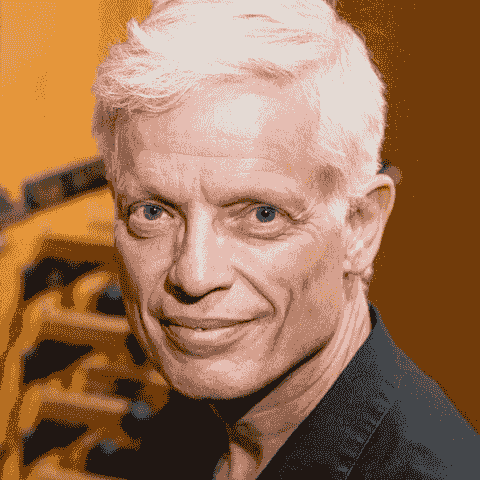
Hans Davidsson
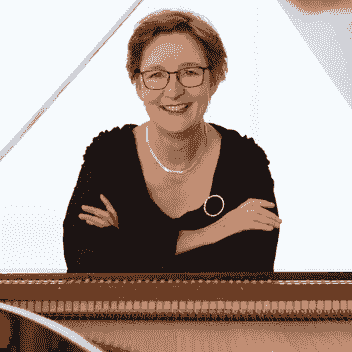
Ulrika Davidsson
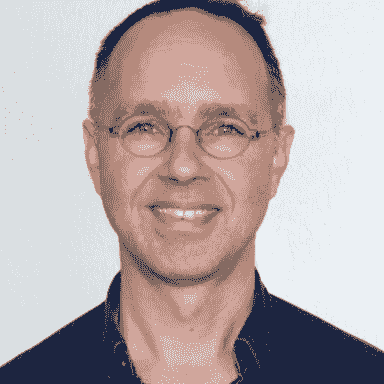
Andreas Edlund
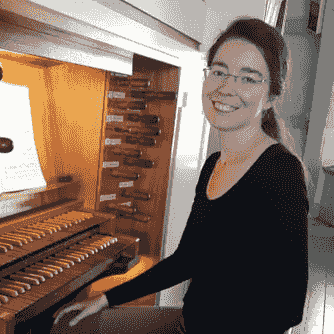
Camille Bloche
Introduction videos
Hans Davidsson
(playlist comprising 7 separate videos)Ulrika Davidsson
Andreas Edlund
Andreas Edlund: ”What’s it like playing continuo on the organ here in Örgryte?” GIOF LIVE...
Publicerat av Göteborg International Organ Academy Lördag 16 oktober 2021Camille Bloche
The organs
Click the images for organ specifications


Postadress
GIOA c/o Hans Davidsson
Klövervägen 17
475 37 Bohus-Björkö
En värld av sinnlig passion och nya klanger - för alla!
© 2026 Göteborgs internationella orgelfestival & Göteborgs internationella orgelakademi
KOMMUNIKATIONSPLATTFORM